
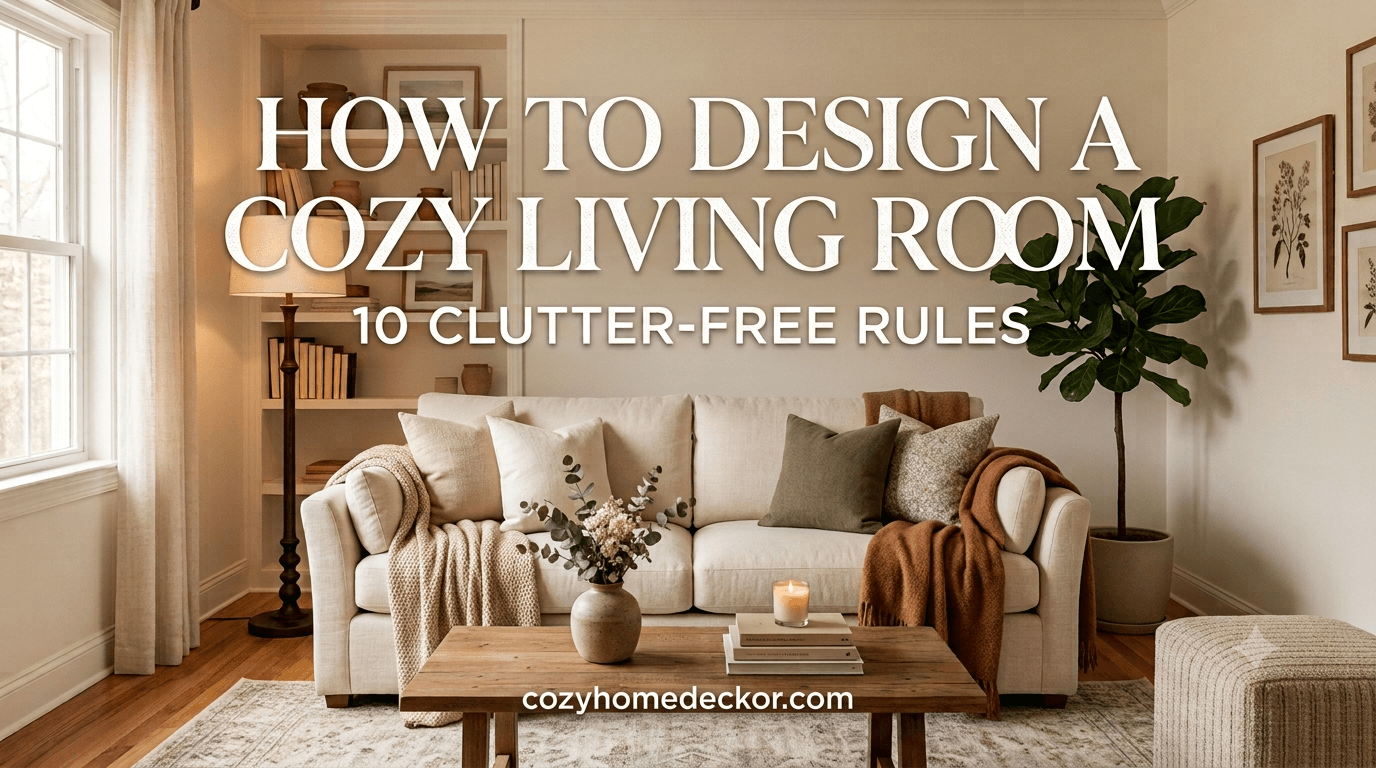
Why does a beautifully staged room in a design magazine feel so immediately welcoming, while a home filled with brand-new, expensive furniture can feel cold? Learning how to design a cozy living room almost never comes down to a massive budget. It comes down to how textures, light, and visual weight interact within the same volume. Most homeowners believe that achieving a warm environment requires a structural renovation, but our experience proves that anyone can master how to design a cozy living room by making specific, high-impact updates.
Before rushing out to buy a mismatched set of accent pieces, it is crucial to sit in your room for five minutes and just look around. Notice what is missing. Is it warmth? Height? Softness? Usually, the answer will surprise you—and it will save you from scattering objects that don’t actually solve the environmental design problem. Coziness is built through deliberate layout strategy, tactile contrast, and a deep understanding of horizontal sightlines.
1. Establish a Grounding Foundation with a Generous Base Rug
A rug does not simply exist to cover your flooring; it serves as the literal anchor for your entire furniture layout. When major pieces of furniture sit on a bare floor without a unifying boundary, they look floating, unsettled, and visually cheapened. Choosing a soft, warm neutral area rug creates an immediate architectural frame that zones your seating area. The subtle, slightly golden undertones of an oatmeal or cream wool rug reflect ambient light upward, instantly softening the surrounding walls and creating an upscale foundation.
Size matters constantly in this foundational layer. A common mistake is buying a rug that is too small—often called the “floating island” trap—where only the coffee table sits on the textile. To achieve a designer-level look, the rug must be large enough for the front legs of all major seating pieces to sit comfortably on top of it. This establishes a continuous visual plane that expands the perceived square footage of the room. Texture should always trump loud patterns; instead of high-contrast geometric prints that compete for visual attention, look for subtle low-pile loops, high-low micro-textures, or heavy woven chenille to add depth without creating visual noise.
2. Eliminate Cold Overhead Fixtures for Layered Indoor Lighting
The standard overhead ceiling fixture is the absolute enemy of an intimate environment. It casts harsh, vertical shadows downward, accentuates facial lines, and flattens the architectural depth of your walls. To build a space you voluntarily want to linger in after sunset, you must establish a system of layered horizontal lighting that bounces light at eye level.
A reliable rule of thumb is to turn off the overhead fixture completely once evening arrives. Instead, introduce a tall, elegant arc floor lamp positioned over your main sectional or reading chair, and pair it with two low-wattage table lamps placed on opposite sides of the room. This layout creates pockets of warmth and shadow, giving the space an instant cozy dimension. Ensure your bulbs are strictly within the warm color temperature family—specifically 2700K or lower. Anything higher introduces sharp blue light waves that mimic a corporate waiting area, completely destroying the relaxed mood you are trying to cultivate.
3. Scale Down Item Count and Increase Individual Visual Weight
Visual chaos is a frequent byproduct of a room crowded with small, lightweight furniture pieces. Homeowners often spread out a small sofa, two separate armchairs, a pair of matchstick side tables, and multiple footstools, hoping to maximize seating options. The result is a broken floor plan that forces the human eye to jump rapidly from object to object, which causes subconscious anxiety and an impression of clutter.
Instead, the spatial strategy should focus on fewer, more substantial items that carry deliberate visual weight. A low-profile modular sectional sofa works beautifully because it creates clean, continuous sightlines across the room. Because it presents as one large, unified shape rather than multiple fractured pieces, it makes the living room feel significantly grander, more architectural, and grounded. Choosing a textured linen-blend or heavy cotton basketweave fabric provides an organic texture that catches natural daylight softly, while firm, structured cushions ensure the main anchor piece maintains an upscale appearance over years of daily use.
4. Introduce Architectural Softness with Fluted Drum Elements
Modern living rooms are inherently filled with sharp rectangles—flat-screen televisions, rectangular window frames, rigid door casings, and boxy media consoles. If your furniture choices mirror these rigid lines, the living area will inevitably feel cold, corporate, and uninviting. To break this up, professional interior stylists intentionally inject round, organic shapes that disrupt the harsh geometry and ease the visual transition between zones.
Incorporating a round coffee table finished in a rich, warm wood tone like walnut works beautifully to soften the center of a room. The absence of sharp corners improves the physical traffic flow, allowing family members to navigate the seating area naturally without bumping into rigid edges. Furthermore, choosing a drum-style base with fluted detailing introduces a gorgeous horizontal texture that mimics custom millwork. Keeping the tabletop clean and clear of daily clutter highlights the natural wood grain and transforms the center of the room into a quiet, calming focal point.
5. Draw the Eye Upward Using Vertical Botanical Elements
Every living space needs a sense of vertical movement to feel balanced and complete. If all your furniture and decor sit strictly below eye level, the upper half of the volume feels vacant, exposed, and structurally unfinished. The absolute fastest way to fix an empty, lifeless corner is by introducing a tall, dramatic floor plant that extends green tones toward the ceiling.
The wide, architectural leaves of a plant like the Bird of Paradise or a potted olive tree fan outward to gracefully fill empty corner volumes without crowding the physical floor space. To make your greenery look entirely convincing and curated, avoid standard nursery pots. Drop the base into an oversized, matte white or raw terracotta ceramic planter, and fill the top with real dried moss or dark river stones. This grounding detail anchors the plant, instantly making the room feel alive, fresh, and intentionally designed.
6. Curate a Restrained Palette of Mixed-Texture Textiles
Throw pillows and blankets are the connective tissue of an interior design scheme, yet they are frequently misused. Material choices shape the tactile luxury of a room. Buying a matching set of satin pillows that comes attached to your sofa is an immediate sign of a generic space. On the other hand, mixing too many random colors results in a chaotic, messy aesthetic that ruins the visual calm.
Stick to a tight, sophisticated palette of earth tones: warm cream, soft sage, oatmeal, charcoal, and deep terracotta. By keeping the colors completely unified and varying the textures dramatically, you create a rich, layered aesthetic. Combine raw linen pillow covers with a heavyweight chunky knit throw blanket draped casually over an armchair. The rough texture of the knit against the smooth linen and soft sofa upholstery creates visual tension and tactile warmth, making the seating arrangement look custom-tailored.
7. Hang Full-Length Window Treatments High and Wide
Windows are the primary source of life in a living room, but short, ill-fitting blinds can make a beautiful room feel cut off and cramped. Curtains should never just cover the glass; they should be used as a structural tool to alter the perceived height and width of your walls, creating a sense of luxury without heavy construction.
Purchase long, solid fabric curtains in a cream or off-white tone that extend fully to the floor. Install your curtain rod as close to the ceiling as possible—ideally just two to three inches below the ceiling line or crown molding—and extend the rod outward so it is twelve to eighteen inches wider than the window frame on both sides. Hanging rods at this height draws the human eye upward, making a standard ceiling feel incredibly spacious. Furthermore, when you draw the panels open, they will rest entirely on the wall space outside the window frame, keeping the glass completely unobstructed and allowing natural daylight to maximize the room’s airy feeling.
8. Master the Surface Balance Using the Rule of Three
Once the major pieces of furniture are properly anchored, styling flat surfaces like console tables, mantelpieces, or coffee tables can feel overwhelming. People often fall into two extremes: leaving surfaces completely bare, which feels sterile, or covering them with an accumulation of random trinkets, which looks messy. Designers rely heavily on the Rule of Three to build asymmetrical, balanced vignettes that feel curated rather than cluttered.
On your center table, arrange exactly three items of varying scales and shapes. Start with a wide, flat base, such as an earthy wooden dough bowl or a clean marble tray to collect the objects. On top of that base, place a tall vertical element—like a single dried botanical branch inside a matte ceramic vase. Finally, complete the trio with a low, grounding object, such as a heavy wax pillar candle or a stack of two oversized art books. This specific composition offers the eye a clear rhythm of heights and textures, making the surface look clean and intentionally styled.
9. Utilize Strategic Mirrors to Expand Perceived Spatial Volume
A mirror is essentially an interior designer’s favorite tool for manipulating light and space within a floor plan. It is a highly functional piece of wall decor that costs significantly less than a large canvas print but provides double the value by actively altering the atmospheric quality of your living area.
Hang a large, decorative round mirror with a thin, minimal frame on the wall directly opposite or adjacent to your primary window. During the daytime, the glass will catch the outdoor view and bounce natural light deep into the darker zones of the layout, instantly making the room feel larger. In the evening, a mirror placed near an active lamp catches the warm, ambient glow, creating a beautiful play of reflections that expands the room’s perceived depth and coaxes the mind into a state of relaxation.
10. Engage the Senses Beyond Visual Placement
True comfort is not merely something you look at; it is an immersive experience that engages all your senses simultaneously. The most visually stunning living room will fail to feel genuinely cozy if it smells stale, if the fabrics feel rough against the skin, or if the room suffers from empty, cold acoustics that echo every footstep.
Incorporate clean-burning wax candles or subtle oil diffusers featuring rich, grounding notes of amber, cedarwood, or warm vanilla. Scent triggers immediate emotional responses in the human brain, signaling that a space is a safe sanctuary for winding down. Pair this olfactory element with soft textures underfoot and background acoustic sounds playing low through a hidden speaker, and you will instantly cultivate a living area that feels premium, thoughtful, and deeply comforting to anyone who crosses your threshold.